
Central Banks, AI Optimism, and Strategic Moves
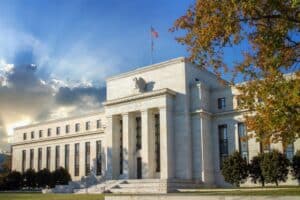
Last week, investor tension rose significantly. All eyes were on the interest rate decision by the US Federal Reserve. On 10 December, the Fed cut rates again by a quarter of a percentage point. This was the third rate cut this year. The aim is to support the cooling labour market, while inflation remains persistently high. It appears that President Trump is hoping for even lower rates. When asked by journalists, he stated that the United States should have the lowest interest rate in the world. In response to how low that should be, he answered, less than 1 percent. In Europe, the narrative is different. ECB board member Isabel Schnabel noted that the next move could be an interest rate increase rather than a cut. That will not happen immediately, but the option is on the table. During the upcoming meeting on 18 December, the ECB may also revise its growth forecasts. For now, interest rates are expected to remain unchanged. This suggests that equities may still be the only viable option for capital growth. Yet, the markets appear to be standing at a crossroads. On one hand, a surprisingly large number of companies exceeded expectations last quarter. In our view, this is mainly due to steady improvements in AI and automation. Companies are benefiting in concrete ways. Routine tasks can now largely be handled by computers, processes are becoming more efficient, and cost control has improved. This is clearly reflected in the results. On the other hand, investors seem to be growing more cautious. After the strong rebound in recent months, valuations now need to be justified by real and measurable returns from AI. This turns out to be more challenging than the market had anticipated. Last week’s results from Oracle and Broadcom were somewhat disappointing. Not because of poor performance, but because they simply could not meet the very high expectations that are already priced into their shares. The bar has been set extremely high. A Busy Week for Macroeconomic Data The coming week will be full of key macroeconomic events. On Tuesday, we will receive a series of important PMI figures from Europe, the United Kingdom, and the United States. These indicators provide an up-to-date view of economic activity in both manufacturing and services, and often shape short-term market sentiment. Later on Tuesday, significant US labour market data will follow, including non-farm employment change, unemployment figures, and wage growth. These are crucial for the Federal Reserve’s interest rate policy and may lead to increased volatility. On Wednesday, attention will shift to UK inflation, with the release of CPI figures. Thursday will be a major day for central banks. Both the Bank of England and the ECB will announce rate decisions and give their statements. Markets will pay close attention to the tone of these remarks and the press conferences that follow. Finally, on Friday, the UK retail sales figures will be released. These provide insight into the strength of consumer spending towards the end of the year. Kistos Delivers Strong Start Kistos was added to the portfolio only recently, but is already demonstrating why it was selected. The company announced an acquisition in Oman that will immediately contribute to cash flow and production. Kistos is acquiring a 5 percent interest in Block 9 and a 20 percent interest in Blocks 3 and 4, all located onshore in Oman. The total acquisition value is 148 million US dollars and will be fully funded from Kistos’ existing cash position. This is important, as it avoids dilution or additional debt. The acquisition adds an estimated 25.6 million barrels of oil equivalent in 2P reserves. In addition, Kistos expects to produce around 9,000 to 10,000 barrels of oil equivalent per day in 2025, with approximately 91 percent consisting of liquids. This makes revenues relatively stable and attractive. One of the most appealing aspects of this deal is the price. Kistos is paying around 5.80 dollars per barrel for proven and probable reserves, which is low compared to many similar transactions in the sector. The acquisition is immediately cash flow positive. It also marks Kistos’ first entry into the Middle East, providing geographical diversification alongside its current operations in the North Sea. The deal fits the company’s strategy of acquiring assets that offer immediate production with long-term potential. According to management, total production is expected to increase to approximately 20,000 barrels per day by 2026. The market welcomed the news, and the share price rose by 35 percent in just a few days. We see this as a clear quality boost for the company. Cash flows should improve significantly in upcoming reports as earlier investments begin to pay off. We are holding our position for now. HelloFresh: Time to Exit HelloFresh shares have been under pressure for several months and have shown no clear signs of recovery. Competition in the meal kit market remains intense and continues to grow, while structural growth appears to be slowing. This puts pressure on margins and makes the business model more vulnerable than we initially assessed. The stock was also hit by a critical short report, which further weakened sentiment. Combined with several downgraded analyst recommendations, confidence in a swift recovery has declined sharply. Although HelloFresh remains a recognised name, we currently see more attractive opportunities elsewhere in the market. We have therefore decided to sell HelloFresh, accepting a loss of nearly 30 percent. While disappointing, we believe it is more important to free up capital for better opportunities than to wait for a recovery without clear catalysts. New Share Under Ten The next Share Under Ten comes from a part of the market that many investors still tend to avoid. Not because the company is weak, but because it lies outside the usual comfort zone. This is a firm with decades of history, a business that has become essential worldwide, and one that is benefiting from several structural growth trends. Think of technologies you use every day, yet rarely notice. Think of industries