

You can follow our portfolio and take advantage of it. Our portfolio is not a buy recommendation.

Risk Management for Active Investors – TIPS & TRICKS

Risk management in investing

Risk management helps to limit losses. It also protects an investor from losing all his capital. Risk occurs when an investor loses money. When this risk can be managed, it offers higher chances of positive returns.

Risk management is an essential but often overlooked requirement for successful active trading. An investor who has built up a substantial profit could easily lose it in one or two bad trades without a good risk management strategy. So develop the best techniques to limit the risks of the markets.  This article will discuss some simple tactics to try and protect your potential profits. Unfortunately, there are no guarantees.

Scheduling transactions

As the Chinese general Sun Tzu once said, “Every battle is won before it is fought.” This phrase implies that planning and strategy—not the battles themselves—wins wars. In the same way, investors use the phrase “Plan the trade and trade the plan.” 

First of all, you need to make sure that your broker is suitable for high-frequency trading. Some brokers are focused on clients who execute few trades and therefore charge high commissions and cannot offer the right analytical tools for active investors.

Stop-loss (S/L) and take-profit (T/P) points are two important ways investors can plan ahead. Successful traders know at what price they are willing to buy and sell. They can measure the resulting return against the probability that the stock will reach their targets. If the adjusted return is correct, they execute the trade. 

In contrast, unsuccessful investors trade without any idea of ​​when they will sell for profit or loss. Losses often cause investors to hold their position in the hope of recouping their money, while profits can have the same effect but with the idea that the securities can bring even more profits.

Consider the one percent rule

Many  day traders  follow the so-called one percent rule. This rule states that you should never put more than 1% of your investment account capital into a single trade. For example, if you have €10,000 in your account, this means that your position in an individual instrument should never exceed €100.

This strategy is common among traders with less than €100,000 in capital — some even go for 2% if they can afford it. Traders with larger capital tend to opt for lower percentages, reasoning that as your account grows, so will your position. The best way to limit your losses is to stay under 2% — trading with more increases the chances of losing substantial portions of your account

Stop loss and take profit points

A “stop-loss” point is the price at which the investor sells his stock and takes the loss. This is often used when a trade does not go as the investor had hoped. These points are designed to prevent the “it will be okay” mentality and limit losses before they escalate. For example, when a stock falls below a key support level, investors often trade their position as quickly as possible.

A “take profit” point is the price at which the investor sells his stock and takes a profit on the trade. This is used when potential further growth is limited due to risk. For example, when a stock hits a resistance level after a strong upward move, many traders will want to sell their position before a period of consolidation begins.
Using Stop-Loss Points More Effectively

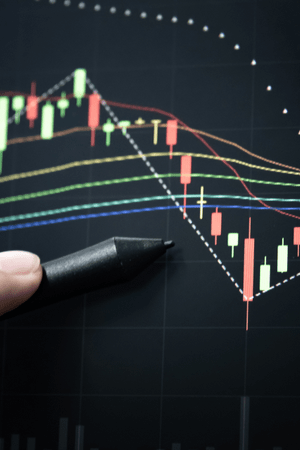
Stop-loss (S/L) and take-profit (T/P) points are often determined through technical analysis . However, analyzing fundamentals can also play a key role in timing. For example, if an investor owns a stock before the figures are announced and enthusiasm grows, he or she may sell it before the news is released and expectations are too high, regardless of whether the take-profit price is reached.

Moving averages (MA) are the most popular way to set these points, as they are easy to calculate and are widely followed by the market. The most important MA are the 5, 9, 20, 50, 100 and 200 day averages. These are best used by applying them to a chart/stock price and determining whether the stock price has historically reacted to them as either a support or resistance level

Another good way to set the S/L and T/P points is to use the support and resistance trend lines. These lines can be drawn by connecting previous highs or lows that occurred significantly above average volume. As with using MA, determining when price reacts to trends and high volumes is key.

When setting the points, consider the following:

  • Use long-term moving averages for stocks with higher volatility to reduce the chance that an insignificant price change will execute the stop-loss order.
  • Adjust the moving averages to match the price range you are targeting. Larger ranges should use larger averages to reduce the number of signals generated.
  • Stop-loss should not be set closer than 1.5 times the high-low range, as it will likely be executed too quickly for no reason.
  • Change the stop-loss according to market volatility. If prices do not fluctuate much, the stop-loss points can be set tighter.
  • Use known fundamentals such as quarterly earnings releases to decide whether or not to enter a trade as volatility and uncertainty normally increase.

Calculate expected return 

Stop-loss and take-profit points are also needed in calculating the expected return. The importance of this calculation cannot be stressed enough, as it requires investors to think carefully about their trades. It also provides a systematic method to compare different trades and choose only the most profitable ones.

The following formula can be used to calculate the expected return:

[(Probability of Profit) x (Take-Profit % Profit)] + [(Probability of Loss) x (Stop-Loss % Loss)] = Expected Return

The result of this calculation is an expected return for the active investor, who then weighs this against other possibilities and decides what to invest in. The probability of profit and loss can be calculated using historical figures on breakouts and breakdowns of support or resistance levels — or for experienced investors, by making a well-considered estimate.

Diversify and Hedge

To get the most out of your investments, never put all your eggs in one basket. If you put all your money in one stock or instrument, the chances of a big loss are very high. So remember, diversify your investments — this can be at different levels, from sector to entire market or geographically. This not only helps to hedge your risks, but also opens up new investment opportunities.

There are also times when you may find that you need to hedge your positions. For example, you may have a position in a stock that has a known performance. You may consider taking the opposite position using options, which will help protect your positions. When the market activity subsides, you can close your hedge position.  Plus500 does not offer hedging and swing trading.

Put options

Buying put options , also known as a “protective put,” can also be used as a way to hedge your potential losses should a trade not go as planned. A put option gives you the right, but not the obligation, to sell your position at a certain price before or after the option expires. For example, if you own $100 of stock XYZ and you buy a 6-month $80 put for a $1.00 option premium, you are protected from any price drops below $79 ($80 strike price – $1 premium).

Compare Brokers

Did this article make you enthusiastic about investing and are you looking for the best broker for your trades? Use our comparison tool and find the best broker for you!


Join thousands of others?

Become a member now and get instant access to our entire platform. 

The value we offer:

See also

Blogs

Day Trading Strategies for Beginners – TIPS & TRICKS

Strategies for Day Trading Day trading is the buying and selling of a financial instrument within the same trading day or even multiple times during the day. Profiting from small price fluctuations can be very lucrative if done correctly. However, it can be a dangerous game for beginners or investors who do not adhere to a well-thought-out strategy. Furthermore, not all brokers are suitable for the high volume of daily transactions by traders. Nevertheless, some brokers are specifically designed for day traders. Knowledge is power In addition to some knowledge of basic trading procedures, day traders should be aware of the latest news and events that affect the markets — What will interest rates do? What does the economic outlook look like? Etc.  Therefore, do your homework. Make a list of stocks you would like to trade and educate yourself about these companies and the markets in general. Keep yourself updated on business news and visit reliable financial websites. Set aside money Determine how much capital you are willing to risk per trade. Many successful day traders risk less than 1% to 2% of their account per trade. If you have a trading account of $40,000 and you are willing to risk 0.5% of your capital per trade, your maximum loss per trade is $200 (0.005 x 40,000). Use excess capital to trade that you can afford to lose in the event of a loss. Remember, it can happen. In addition to money, also set aside time Day trading requires your time. That’s why it’s called day trading. You’ll even lose a large part of your day. So don’t consider day trading if you have limited time. The process requires the trader to monitor the markets and spot opportunities that can arise at any time during the trading day. Acting quickly is essential. Start small As a beginner, focus on no more than 1 or 2 companies’ stocks during a session. Following and spotting opportunities and possibilities is easier with just a few stocks . It has become increasingly common to trade in “fractional shares”, which are, as the name suggests, smaller parts of a single share. This allows you to specify that you want to use a specific, smaller amount to invest. This means that, for example, Apple shares are trading at $250 and you only want to buy $50 worth of Apple shares, many brokers now allow you to buy one-fifth of a share. Avoid Penny Stocks  You’re probably looking for deals and low prices. However, stay away from penny stocks . These are often illiquid stocks with very little chance of making a big profit. Stocks that are listed for less than $5 per share are delisted from major exchanges and are only available over-the-counter. Unless you see a real opportunity and have done your research, stay away from these securities. Time your transactions Many orders placed by investors and traders are executed immediately when the markets open in the morning, which contributes to price volatility. An experienced player can recognize these patterns and profit from them. For novice day traders, it may be wiser to observe the markets without trading for the first 15 to 20 minutes. Volatility usually levels off halfway through the trading day, and then starts to increase again as the end of the day approaches. Although peak hours on the markets offer many opportunities, it is safer for beginners to avoid them. Limit losses with limit orders Choose what type of orders you place for your trades. Will you use market orders or limit orders? When you place a market order, it will be executed at the best available price at that time — so there is no price guarantee. A limit order, on the other hand, guarantees the price, but not the execution. Limit orders help you trade with more precision, where you determine a price (not unrealistic but feasible) at which the securities will be bought or sold. An advanced and experienced day trader can also use the addition of options to his/her strategy to hedge his/her own positions.   Be realistic about the profits A strategy does not always have to make a profit to be profitable. Most traders only make a profit on 50% to 60% percent of their trades. However, they make more on their profits than they lose on their losses. Make sure that the risk on each trade is limited to a specific percentage of your account and that your entry and exit strategy is clear and written down. Keep calm There are plenty of times when the markets will test your nerve. As a day trader, you will have to learn to control greed, hope and fear. Decisions should be made based on logic, not emotion. Stick to the plan Successful day traders need to act fast, but not think fast. Why? They have developed a trading strategy in advance, along with the discipline to stick to it. Instead of chasing profits, it is important to stick to your formula. Don’t let emotions get the better of you by giving up your strategy. Day traders have a common motto: “Plan your trade and trade your plan.” Getting started with day trading? Are you excited about day trading after reading this article? Then take a look at our range of CFD brokers , because these brokers work with leverage they are suitable for day trading. In this way you can have big consequences with a small investment. Please note, CFDs have an increased risk. 82% of retail investor accounts lose money when trading CFDs with this provider. You should consider whether you can afford to take the high risk of losing your money. Our reading tips for the novice investor

Lees verder >
Blogs

Popular Active Investment Strategies – THIS IS WHAT YOU NEED TO KNOW!

Popular investment strategies Active investing is the buying and selling of securities in the short term in order to profit from short-term price fluctuations in the stock market . The mentality associated with an active investment strategy differs from the long-term, buy-and-hold strategy that passive investors often employ. Active investors believe that by using short-term trends in the market, large profits can be made. There are several methods to implement an active investment strategy, each with its own appropriate market environment and risks that arise from the strategy. Here are the four most common active investment strategies and the costs of each strategy. *Plus500 is not suitable for inexperienced investors and ‘scalping’ is not allowed. Day trading Day trading is probably the most well-known active investment strategy. It is often seen as another name for active investing as a whole. Day trading, as the name suggests, is the method of buying and selling securities within the same day. Positions are closed on the same trading day they are opened, and are never held when the markets close. Day trading is normally only done by professional traders, such as specialists or market makers. However, with the advent of electronic trading, day trading is now also possible for novice investors. Position trading Position trading is considered by some to be a buy-and-hold strategy rather than active investing. However, when executed by an experienced investor, position trading can be a form of active investing. Position trading uses longer-term prices – this can be anything from daily to monthly data – in combination with other methods to determine the current trend of the market. Depending on the trends, these types of trades can last for days, weeks, or sometimes even longer. Trend traders look for successive “higher highs” or “lower highs” to determine the trend of a position. By riding the waves of these trends, trend traders attempt to profit from both rising and falling market prices. Trend traders therefore attempt to determine the direction of the market, but do not attempt to predict the price of instruments. Typically, trend traders jump in when the trend is identified and let go of their position when the trend disappears. This means that in periods of high market volatility, trading in trends becomes more difficult and the number of positions in them decreases. Swing Trading The moment a trend breaks is when swing traders jump in. At the end of a trend, there is usually some price volatility as the next trend emerges. Swing traders start buying and selling when that volatility occurs. Swing traders typically hold their positions for longer than a day, but for a shorter time than position traders. Often, swing traders create a set of trading rules based on technical analysis or fundamental research. These rules and algorithms are designed to determine when to buy and sell a security. While a swing trading algorithm does not have to predict the exact peaks and troughs of prices, it does require the market to move widely in one direction or another. Sideways markets or markets that remain at a certain level are risky for swing traders.  It is important to note that Plus500 does not offer hedging and swing trading. Scalping The investment strategy called scalping is one of the fastest strategies to be used by active investors. It involves investors profiting from various price differences caused by bid-ask spreads . This strategy works best by creating a spread by buying at the bid price and selling at the ask price, thus receiving the difference between the two prices. Scalpers hold their position for a very short time, which reduces the risk of scalping. In addition, scalpers do not try to profit from large swings or large trades. They try to take advantage of small fluctuations that occur frequently and thus make smaller trades more often. Because the profit per trade is small, scalpers look for liquid markets in order to increase the frequency of their trades. While swing traders look for markets where large, sudden fluctuations occur, scalpers look for quieter markets that are less sensitive to this in order to repeatedly profit from the same spreads. The Costs of Investment Strategies There is a reason why active investment strategies were first used by only professional traders. Besides the fact that a professional brokerage firm can reduce the cost of high frequency trades, it also ensures better execution of the trades. Lower commissions and better execution are two factors that improve the potential profits of the strategies. Typically, significant hardware and software purchases are required to successfully implement these strategies. Combined with the necessary real-time data, these costs may seem to make active investing very inaccessible to the individual investor, but it is not unattainable. This is why passive and indexed strategies that employ buy-and-hold methods can offer this at lower costs and also less tax in the case of potential profits.  However, passive strategies can never beat the market as they are often indexed to the general market. Active investors try to capture “alpha”, hoping that the profits they make from trading will be greater than the costs, in order to maintain a successful long-term strategy. If this is not successful, it is also possible to suffer greater losses. Getting started with an active investment strategy? Are you enthusiastic about active investing after reading this article and would you like to start? Then definitely check out our range of CFD brokers ! Because CFD brokers usually work with leverage, small price changes can cause large changes in the value of your portfolio. Pay close attention, CFDs usually involve greater risks. Therefore, read up on it and try out a demo account first if you have any doubts. Our reading tips for the novice investor

Lees verder >
Blogs

Forex Investment Strategies – TIPS & TRICKS

Forex Investing Strategies Forex (currency) is a subject that seems complicated to many people. In reality, forex is the same as other investments, if you don’t know much about it, it can be dangerous.  The good news for those looking for a forex strategy is that there are more than enough strategies for every investment horizon. Whether you are a long-term investor or someone who watches the market at all times looking for opportunities, as long as you are curious about forex strategies, you will find a strategy that suits you. Follow the daily or weekly trends A simple forex strategy is to follow the daily or weekly trends. Use the prices and charts to spot trends that seem well-founded and jump on them. A warning for this way of trading is that your trades may seem very small in relation to the prices, but in fact they could be hundreds of pips. This means you need to trade small. Be conservative in your allocation when you buy and allow your position to develop. Set a reasonable stop and plan a target. Beginners find this a simple strategy because you don’t have to constantly monitor the market, they can trade when they have time. Carry trade Carry trading is a method in which you buy and hold a currency that pays a high interest rate against a currency that has a low interest rate. You receive a daily rollover for the interest rate difference between the two currencies. The advantage of carry trading is that you receive income daily, even when your positions are not fluctuating. In addition, since most forex investments involve leverage, you get paid on the size of your trade, not the size of your capital.  The disadvantage of carry trading is that the interest rate differentials are often not that big compared to the risk you are taking. Furthermore, the currencies that are most suitable for carry trading are usually the currencies that react the most strongly to bad news about the global markets. In other words: as long as the economy is doing well, these currencies will continue to rise and pay out, but if things (unexpectedly) get worse, they will dive hard and fast. If your leverage ratio is too high, your account can quickly become a lot smaller. Day trading The Forex market is always moving. 24 hours a day, 7 days a week. Although the most active trading moments in Forex are quite specific times, the market always makes small movements. Depending on what you want to invest in, you can choose the best moment. Most day trading strategies are based on technical analysis, which has its advantages. Since the Forex market is very technical, you can profit from this with a sharp eye and a good plan. Fundamental trading Some investors take a more old-fashioned approach to their investments. They prefer to invest in something they understand rather than signals that charts and prices give. For this cautious investor, fundamental forex trading is best suited. Fundamental trading is following the news in different countries and investing in the countries with strong economic trends compared to the others. This approach is quite simple as it focuses on the long term. The tricky part is learning to understand the economic reports and comparing them to other countries. Our reading tips for the novice investor

Lees verder >
Blogs

Expensive VS Cheap Stocks – THIS IS WHAT YOU NEED TO KNOW!

Investing in expensive or cheap shares? Investors may have different ideas about what constitutes cheap and what constitutes expensive stocks . For some investors, an expensive or cheap stock refers to the price and what their investment will cost. For others, the term expensive or cheap refers to the relative value between a stock’s market price and its intrinsic value. Better indicators of whether a stock is expensive or cheap are the extent to which a stock reflects the company’s earnings and assets. Market Investors can’t always tell from the market price alone whether a stock is expensive or cheap. While some stocks command triple-digit sums, others trade for less than a tenner. Stocks with a high price are not necessarily expensive, and stocks with a low price are not necessarily cheap. Investors can bid a lot for a stock if they expect a lot of growth. The greater the growth potential of a stock, the more likely the high price is justified. On the other hand, if a stock with a low market price does not fully reflect the company’s poor growth potential, it can still be seen as expensive. Price-earnings ratio Investors also sometimes compare share prices to company earnings per share when valuing a stock. So whether a stock is expensive or cheap can depend on its price-earnings ratio. In general, the higher the price-earnings ratio, the more expensive the stock and vice versa. For stocks that have made high profits, the relatively high market price may still not be considered expensive if the price-earnings ratio is still low. For stocks that have made low profits and are therefore relatively cheap , they may not be considered cheap when the price-earnings ratio is high. Price-Equity Ratio Investors can also compare stock prices to a company’s equity to determine whether a stock is expensive or cheap, especially during periods of volatile earnings. A temporary increase or decrease in earnings can make a stock suddenly appear cheaper or more expensive than it may be in the long run. Comparing prices to equity often provides a more stable method of valuing a stock. The stock price to equity ratio is compared to the ratios of similar stocks or the industry average. The higher the ratio, the more expensive the stock may be, and vice versa. Shareholders The different numbers of outstanding shares between companies can make stocks appear more or less expensive than they actually are. Stocks with fewer outstanding shares are likely to trade at higher prices, but are not necessarily expensive when the ratios discussed earlier are low. Conversely, stocks with more outstanding shares often trade at lower prices, but are not necessarily cheap when the ratios are high. Without taking into account the number of shareholders, investors can misinterpret the share prices of companies with the same equity. Want to start investing in stocks? After reading this article, are you enthusiastic about investing in shares and are you convinced that this is something for you? Then definitely compare our  range of stock brokers  to find a provider that suits you best! Investing in cheap or ‘normal’ shares is currently being done by many people and is also one of the most popular forms of investment. Are you still in doubt? Try a demo account to learn how to invest in shares without risk! Our reading tips for the novice investor

Lees verder >
Blogs

Differences between stocks and bonds – THIS IS WHAT YOU NEED TO KNOW!

Stocks and bonds Investors are always told to diversify their portfolio between stocks and bonds, but what exactly is the difference between these two investments? Here we discuss the fundamental differences between stocks and bonds. Stocks are equity; bonds are debt Stocks and bonds are two different ways for an entity to raise money to operate its business. When a company issues stock, it is selling a portion of itself for cash. When it issues bonds, it is taking on debt with the agreement to pay interest for the use of the money.  Shares are simply small parts of a company. It works like this: a company has become successful after its start-up phase. The owners now want to expand, but are not able to do so by using only the income from their activities. For further financing, they can therefore go to the financial markets.  One way to do this is to split the company into pieces and sell some of these pieces on the market in a process called an IPO. A person who buys a share is actually buying a piece of the company, making him or her a partial owner (albeit a very small one). For the company, shares are therefore considered equity. Bonds, on the other hand, are debt capital. A government, company, or other entity that needs cash borrows money on the public market and then pays interest to these investors. Each bond has a certain nominal value (e.g. €1000) and pays a coupon (the interest payments) to the investors. With a 4% coupon, the investor receives €40 annually on the €1000 bond until the bond reaches its maturity. On the maturity date, the investor receives his full payment back, except in the rare case where the bond issuer can no longer meet the payment obligation. The difference for investors Given that stocks are partial ownership of a company — and therefore also of that company’s profits and losses — the value of an investment can grow when a company performs well. On the other hand, the value can also fall when the company does less well, or in the worst case, disappear completely in the event of bankruptcy. Bonds do not have the same high-return potential as stocks, but are preferred by investors who prioritize income. Bonds are also less risky than stocks. Although bond prices can fluctuate—sometimes quite dramatically due to higher-risk markets—most bonds repay their full amount at maturity and are much less likely to suffer losses than stocks. What is right for you? Many people invest in both stocks and bonds for diversification purposes. The right mix of stocks and bonds in your portfolio depends on your time horizon, risk tolerance, and investment goals. Our reading tips for the novice investor

Lees verder >