

What are cryptocurrencies?
In fact, a cryptocurrency is nothing more than a digital form of money. Just as there are different currencies such as euros and dollars, there are also different digital coins such as bitcoin and litecoin . Where euros and dollars are tangible and you can therefore physically have them in your wallet, a cryptocurrency is not. Cryptocurrencies, or crypto for short, consist of encrypted pieces of digital code. In simple terms, this comes down to the following:
When you take a €10 note out of your wallet and look at it closely, you will see a serial number on it. This serial number may seem like nothing more than a long series of numbers, but in fact it contains a lot of information, such as the origin of the note, the printer, the date the note was printed and so on. When you take away the tangible note itself and only store the serial number, or “the code”, somewhere, then you are essentially talking about the idea of a cryptocurrency. This piece of code is still worth €10, only this value is not linked to a physical piece of paper. Cryptocurrencies therefore get their value from all kinds of pieces of code.
Why do cryptocurrencies exist?
We all remember the credit crisis of 2008, in which banks and financial institutions were mainly to blame. Confidence in banks took a big hit as a result. Many people have little to no knowledge of financial matters such as mortgages and loans, so people assume that banks and financial institutions provide reliable and honest advice. This turned out not to be the case at the time. Many people therefore felt that there had to be an alternative to make transparent payments without the interference of banks. This is why cryptocurrencies were set up.
Since when does cryptocurrency exist?
Programmer Satoshi Nakamoto published a paper in 2008 explaining the idea of ‘blockchain’. He called it: “Bitcoin: a peer-to-peer electronic cash system”. He introduced the idea of a digital payment method where one can complete transactions without the intervention of banks . However, something or someone must be present to verify transactions and ensure that the online currency is not double-spent. This is all regulated by the principle that every “participant” in the payment system automatically checks each other by means of a so-called proof of work system. The first concrete currency that resulted from this principle is the well-known Bitcoin.
Bitcoin Mining
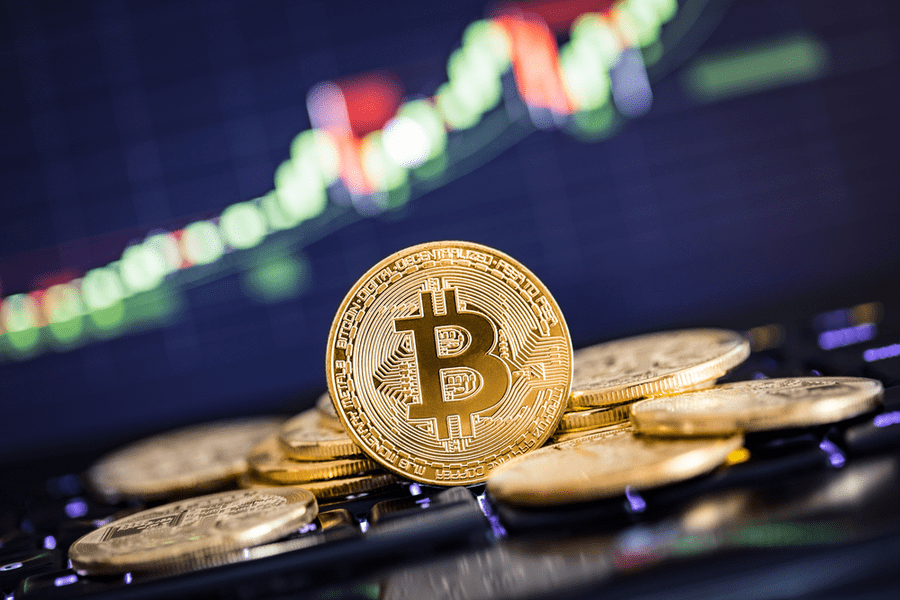
The bitcoin is the very first crypto currency, set up by Nakamoto. You can therefore see the bitcoin as a kind of ‘primordial currency’. But how exactly is a bitcoin created? You have probably heard of the term ‘mining’. Mining bitcoins means obtaining a reward in the form of bitcoins, for making your computer available to the network. As mentioned before, the blockchain must be constantly checked to ensure that no double spending is done and that transactions are verified. This requires computing power. A lot of computing power. To ensure this, the blockchain gives each computer that checks a new block a reward in the form of bitcoins.

What do banks and governments think?
Banks and governments have not welcomed cryptocurrencies with open arms, and that is an understatement. They are already coming up with all kinds of policies and regulations to limit cryptocurrency in its possibilities. These actions, which probably stem from a kind of fear, make sense in a way: banks and governments will have a lot less influence on global payment transactions.
One of the most frequently heard reasons for the measures against crypto is the fear that due to the anonymity of cryptocurrency it will be used extensively to finance crime and war. However, these kinds of illegal practices are currently also financed without using crypto.
It is also often argued that in the case of crypto, the government can no longer guarantee the savings of its citizens, which means that cryptocurrencies would not be safe. Banks have already shown this before to cause a crisis, in which governments could not guarantee the money of the citizens. Whether the traditional banking system is reliable is also questionable.
Governments and banks are struggling with a fear of change and the fear of losing influence. This unfortunately limits the opportunities for blockchain and cryptocurrency to grow rapidly.
Investing in cryptocurrencies
Are you curious about investing in cryptocurrencies but don’t know exactly which broker you can trade with? Then compare brokers that offer cryptocurrencies and find the broker that suits you best!